
On Food, Women, and Finding Your Way
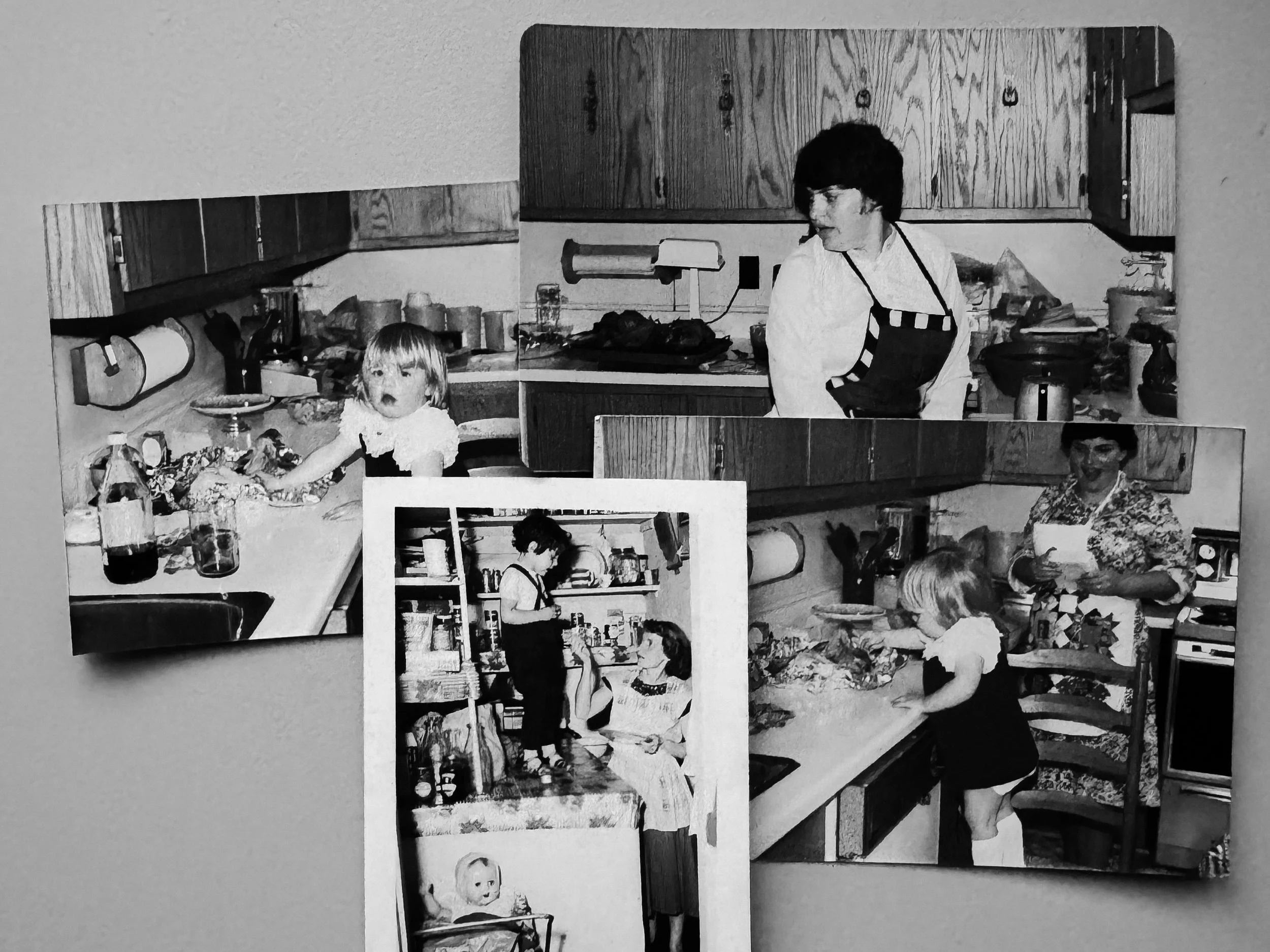
If I had to narrow my life down to one constant, it would be food.
I grew up in a house where you were always involved in the happenings of the kitchen. My mom learned at a very early age from her own mom that learning how to cook and to make meals was both a necessity and a privilege. She passed this philosophy on to my brother and me naturally, but with great intention. We helped, we watched, we tasted, we messed up, but what we learned was that food wasn’t just fuel; it was patience, connection, and nourishment. Having a homemade meal at the dinner table every night was a non-negotiable, no matter how busy we got. It was where stories came out, where we caught up on our days, and where we slowed down to simply feast.
Recently, I found myself scrolling the Smithsonian National Museum of American History website, checking to see if Julia Child’s kitchen was still on display — something I already knew, thanks to having watched the movie Julie and Julia. I ended up there after reading the introduction to a new cookbook I bought, The Lost Kitchen by Erin French. I first discovered Erin through Ina Garten, another famous foodie and cookbook author I’ve followed for years, and one whose love of food and storytelling has always resonated with me. Seeing that Julia’s kitchen is still a permanent fixture at the museum felt oddly grounding, like a quiet reminder of how enduring her influence really is.
I remember first really seeing Julia Child through the movie Julie and Julia, which I’ve watched more times than I’ll admit publicly (okay, at least 40). She isn’t necessarily my culinary north star, but she changed everything when it came to food. She made French cooking feel possible in North American homes. From French onion soup, to boeuf bourguignon, and all those once-intimidating dishes that quietly became family staples. More importantly, she lived an extraordinary, unexpected life and transformed cooking from a quiet domestic duty into a public, respected, and profitable profession. At a time when women were expected to cook for their families and stay out of the spotlight, she claimed authority in the kitchen without shrinking herself or apologizing for it. And she accomplished all of this with the undying love and support of her husband, Paul. Through her books and television work, she made complex techniques accessible, normalized imperfection (this is a big one), and treated home cooks as capable learners (sounds familiar, mom). In doing so, she reframed so-called “women’s work” as skilled labour worthy of recognition, income, and influence, changing not just how people cooked, but who cooking was allowed to belong to. Simply put, she paved the way for all the women in current day culinary fame. Including this amateur chef.
Her story hits differently when you’re in a pivot yourself. And honestly, so do all the other chef’s and cooking experts I’ve followed over the years.
Julia didn’t find food early; she was lost for a while, kind of like me, Erin French, and Ina Garten. When she and her husband moved to France for his work, she tried everything from basket weaving, and hat making, to French lessons, searching for something that excited her. Then she tasted French food - really tasted it - and realized two things: it was extraordinary, and it was inaccessible to the people back home. Translating it became her work. Sharing it became her purpose. The rest is history. She also taught us morsels not to be afraid of butter because “with enough butter, anything is good.”
Her story keeps nudging me lately.
Friends have told me for years that I should film my cooking or start a channel or teach cooking classes. I never wanted that. I love cooking and entertaining on my own terms with no lights, no timelines, no optimization. Just food, people, fellowship, and the pace I choose. And yet, food keeps showing up as a throughline, no matter how many different careers or chapters I move through. It has been my constant.
At the same time, I’m reading The Lost Kitchen by Erin French, a cookbook that’s really a story about collapse, rebuilding, and finding your way back to yourself. I first discovered Erin through Ina Garten, who mentioned her on a recent podcast when asked which young chefs or food writers she was drawn to right now. If you know little about Ina’s life before Barefoot Contessa, her memoir Be Ready When the Luck Happens is worth the read. Before food television fame, Ina had a very different résumé, working for the U.S. government in the Office of Management and Budget during the Ford and Carter administrations, analyzing budgets and writing policy papers on nuclear energy.
You heard me. The farthest thing from food and the kitchen.
At night and on weekends, she taught herself how to cook, eventually realizing the job no longer lit her up. Then came the leap: she quit government, bought a small specialty food store in the Hamptons called Barefoot Contessa and the rest is history. A pivot from nuclear policy to a roast chicken icon. Oddly comforting proof that even the calmest, most composed people you admire didn’t start where they ended up. Her life stalled and she knew something had to change, so food became her way forward.
Even Julie and Julia is really about that. A woman stuck in a life that felt too small, using food and writing — the thing she already knew how to do — to help her climb out of a rut. Her life didn’t unfold the way she imagined, but it changed completely anyway.
I don’t think this is about wanting a food career. I think it’s about recognizing that food is a common denominator across generations, cultures, and reinventions. It’s where we learn patience, where we practice care, and where we remember who taught us, and how much of them lives on in the way we cook, serve, and gather.
Even when everything else feels uncertain, the kitchen has always been there for me and its quietly reminding me that transformation doesn’t have to be loud to be meaningful. Sometimes it starts with chopping an onion, feeding the people you love, and trusting that the next chapter will reveal itself when it’s ready.